
How We Built a 10-Video-Per-Day Content Machine
From a single phone recording to 10 pieces of content across 4 platforms. Here's the exact system we use.
Six months ago, we were publishing maybe two pieces of content a week. Today, we push out ten or more videos every single day across multiple platforms, plus written content, plus email. The team size did not change. The hours did not double. We built a system.
I am going to walk you through exactly how we did it, the tools, the workflows, the logic, and how you can replicate this for your business without hiring a content team.

The Core Principle: Record Once, Repurpose Everywhere
Most founders think about content wrong. They think one piece of content equals one output. Record a video, post a video. Write a blog post, publish a blog post. That is a 1:1 ratio and it does not scale.
Our ratio is closer to 1:10. One recording session generates ten or more distinct pieces of content across formats and platforms. Here is the logic:
- One 10-minute video becomes 3-5 short-form clips
- The transcript becomes a LinkedIn post, a Twitter thread, and an email section
- Key quotes become carousel graphics
- The full video gets posted on YouTube
- Insights get restructured into a blog post
"The input is 10 minutes of your time talking about something you already know. The output is a week of content across every channel that matters for B2B."
The Exact Workflow: Step by Step
1Batch Record (30-60 minutes per week)
Every Monday, I block one hour. I record 3-5 videos, each between 5 and 15 minutes. No script. No teleprompter. I have a list of topics pulled from three sources: questions clients asked me last week, topics that performed well on LinkedIn or YouTube, and industry trends I have an opinion on.
The recording setup is deliberately simple. A good microphone, decent lighting, and my laptop camera. I use Riverside for recording because it captures high-quality local files and makes it easy to pull separate audio and video tracks.
Key insight: Do not over-produce. B2B audiences respond to authenticity and substance, not cinematic quality. A founder talking directly into the camera about a real problem will outperform a polished corporate video every time.
2Automated Transcription and Processing
Once recording is done, the files get dropped into a shared folder. That triggers an n8n workflow that automatically sends the audio to an AI transcription service for a full, timestamped transcript, passes the transcript to Claude with a structured prompt that extracts key insights, quotable moments, topic summary, and suggested clip timestamps, then stores everything in our content database.
This step used to take our team 2-3 hours per video. Now it takes zero human time. The workflow runs in the background while we do other things.
3AI-Powered Content Generation
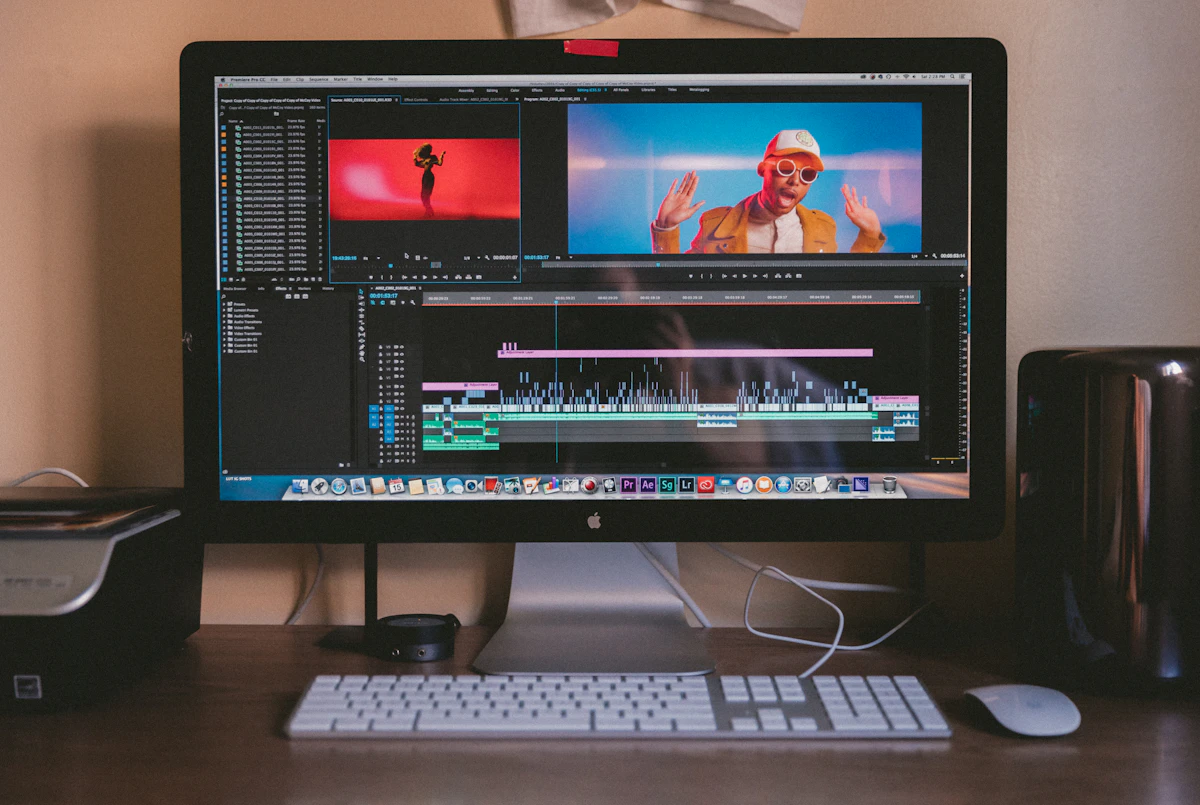
Here is where the multiplication happens. Another n8n workflow takes the processed transcript and generates short-form video clips with captions formatted for vertical video, LinkedIn posts restructured into native format (hook, story, insight, CTA), Twitter/X threads with punch and numbered points, email newsletter sections that maintain our voice, and full blog post drafts with proper headings and SEO optimization for longer videos with substantial depth.
4Human Review Layer
I want to be honest about this part because too many AI content articles skip it. We do not publish raw AI output. Every piece goes through a quick human review. But reviewing and editing takes 10-15 minutes for a full day's content. Creating all of it from scratch would take 4-6 hours. That is a 90% time reduction while maintaining quality.
Our review process: scan each piece for accuracy, check that the voice sounds like me and not like a robot, verify any stats or claims mentioned, and adjust CTAs based on current priorities.
5Automated Distribution
Approved content gets scheduled and published automatically. We use Buffer for social scheduling, integrated with n8n so approved content flows directly into the publishing queue. The distribution schedule is platform-specific: LinkedIn gets 1-2 posts per day, YouTube gets 2-3 long-form videos per week plus daily Shorts, Instagram/TikTok gets 2-3 Reels per day, Twitter/X gets 3-5 posts per day including threads, and email goes out 2x per week.
Want to see how this applies to your business?
Get a personalised breakdown in your free Growth Audit.
The Tools Stack
Here is exactly what we use:
- Recording: Riverside (or Loom for quick takes)
- Orchestration: n8n (self-hosted) for all workflow automation
- AI processing: Claude for content generation and repurposing
- Transcription: AI transcription integrated via n8n
- Video editing: Automated captioning and clipping tools triggered by n8n
- Content database: Airtable for tracking all content assets
- Scheduling: Buffer for social, connected via API
- Analytics: Custom dashboard pulling data from all platforms
Total monthly cost for the entire stack: under $200. That is less than one hour of a freelance content strategist's time.
How to Maintain Quality at Volume
The number one objection I hear is: "If you are posting that much, the quality must suffer." Fair concern. Here is how we handle it:
Quality starts with the input. If your original video is insightful and valuable, the repurposed content inherits that value. Garbage in, garbage out applies here more than anywhere.
Structured AI prompts are everything. We do not just say "rewrite this for LinkedIn." Our prompts include tone guidelines, structural templates, audience context, and examples of high-performing content. The output quality is directly proportional to prompt quality.
The 80/20 rule applies. Not every piece needs to be a masterpiece. Some posts drive engagement. Some drive traffic. Some build authority. The volume ensures you are always present in your audience's feed, and the human review layer ensures nothing embarrassing goes out.
Track what works and feed it back. We review performance weekly. Content that performs well gets analyzed, and those patterns get fed back into our AI prompts. The system literally gets better over time.
Results After Six Months
Here is what changed after implementing this system:
- Content output: From 2 pieces/week to 70+ pieces/week
- LinkedIn impressions: Up roughly 5x
- Inbound leads from content: Increased substantially month over month
- Time spent on content: Down from 15+ hours/week to about 3 hours/week
- YouTube subscribers: Significant growth from consistent publishing
"The compounding effect is the real story. More content means more impressions. More impressions mean more followers. More followers mean more engagement on each post. It is a flywheel, and once it starts spinning, it accelerates."

How to Replicate This for Your Business
You do not need our exact stack. Here is the minimum viable content machine:
- Block 1 hour per week for recording. Pick 3-5 topics. Hit record. Do not overthink it.
- Set up transcription. Even a simple service works to start.
- Use AI to repurpose. Even manually using Claude or GPT to rewrite your transcript into different formats will save you hours.
- Schedule in batches. Use any scheduling tool to queue content for the week.
- Automate progressively. Start manual, then automate one step at a time. Do not try to build the whole system on day one.
The most important step is the first one. Record something this week. Even if you manually repurpose it, you will immediately see how one video can become five pieces of content.
Want us to build your content machine?
Book a free Growth Audit and we will show you exactly how to set up a content engine tailored to your business, your audience, and your capacity. One hour of recording. Ten pieces of content per day. Every week.
Book Your Free Growth Audit →Some links in this article are affiliate links. If you sign up through them, 9Mil may receive a commission at no extra cost to you. We only recommend tools we actively use.
Want this for your agency?
See it working live on your numbers.
20 minutes. No slides. No pitch.
See the Demo →